Blog
Why Durable Blades Matter in Modern Farming
Farming has come a long way from traditional hand tools to advanced machines that save time and labor. At the heart of this mechanization are agricultural blades—small components that play a big role. Whether used in rotavators, harvesters, threshers, or seeders, blades are responsible for precision cutting and efficiency. But not all blades are the same. Choosing durable, high-quality blades can make the difference between smooth operations and costly downtime.
The Role of Blades in Agriculture
Blades are the working edge of most agricultural machinery. Their functions include:
Cutting and Harvesting: Used in machines like reapers, harvesters, and threshers to cut crops efficiently.
Soil Preparation: Rotavator blades break down soil clumps and prepare fields for sowing.
Residue Management: Happy Seeder blades allow direct seeding in crop residue, saving time and supporting eco-friendly farming.
Without reliable blades, even the most advanced machine cannot deliver its full potential.
Why Durability Matters
Agriculture often involves working in harsh field conditions—rocky soils, stubble, and moisture can quickly wear out weak blades. Durable blades bring key advantages:
Longer Service Life – High-quality steel ensures blades withstand repeated use without quick wear.
Reduced Maintenance – Farmers save on frequent replacements and downtime.
Consistent Performance – A sharp, reliable blade ensures smoother cutting and higher crop yield.
Cost Savings – Though durable blades may cost more initially, they save money in the long run.
Common Issues with Low-Quality Blades
Many farmers choose cheaper blades to cut costs, but these come with hidden problems:
Frequent Breakage – Poor materials crack or bend easily.
Reduced Efficiency – Dull or damaged blades waste fuel and time.
Damage to Machinery – Ill-fitted blades can strain other parts like bearings and shafts.
These issues not only slow down farming operations but also lead to unexpected repair costs.
How to Choose the Right Blade
When selecting blades, consider the following:
Thickness & Size – Thinner blades (2MM–3MM) are suitable for lighter tasks, while thicker ones (5MM–8MM) handle tough soil and heavy-duty work.
Material – Look for high-carbon steel for durability.
Compatibility – Always ensure blades match your machine’s model and specification.
Brand Reliability – Choose manufacturers known for strict quality control and field-tested products.
Star Force Advantage
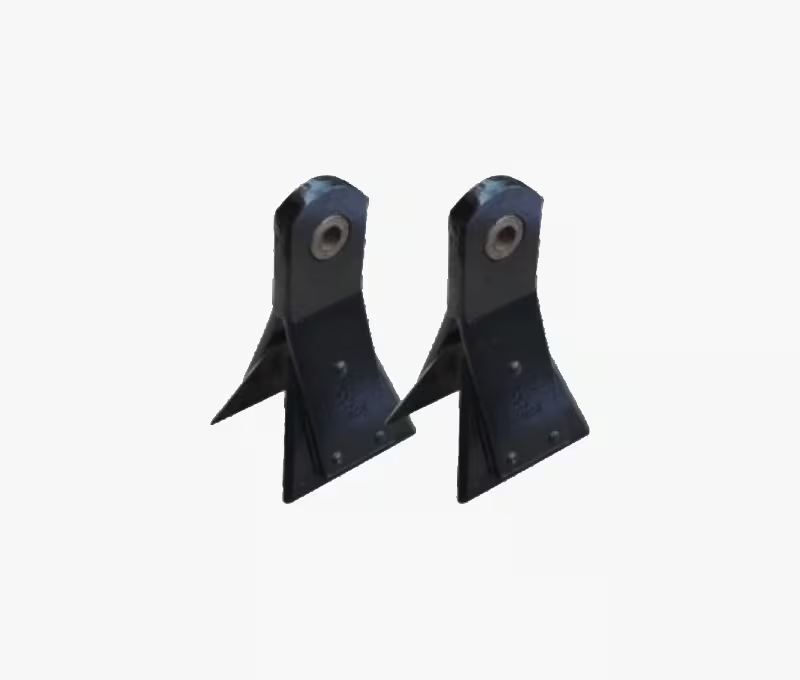
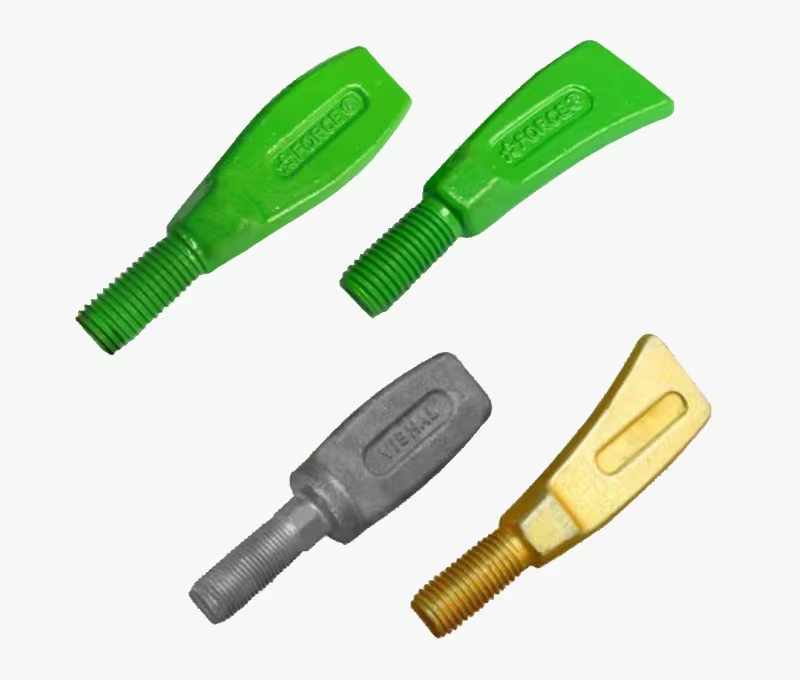
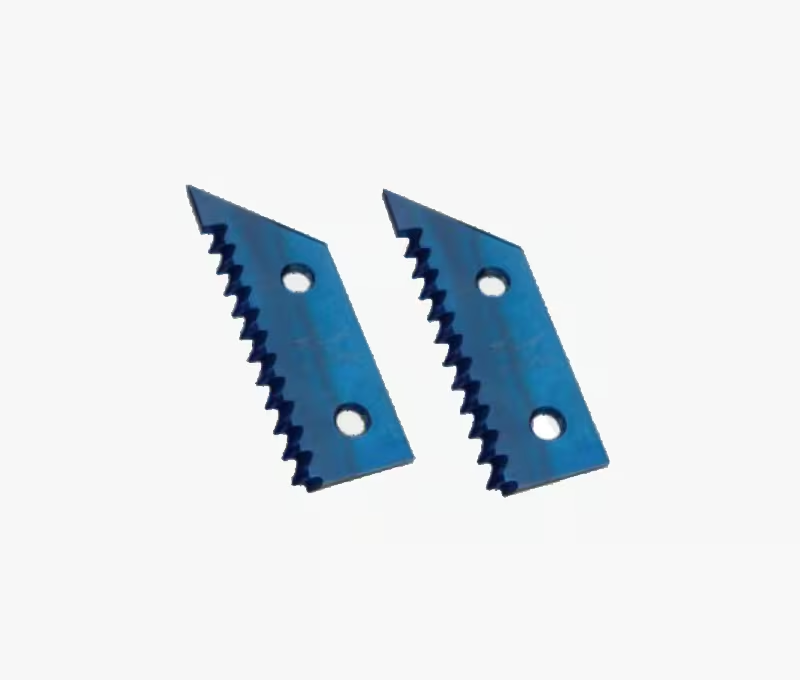
At Star Force Engineering Co., we understand that blades are the backbone of agricultural machinery. Our blades—whether M-Type, Class, Basket, GDR, or Happy Seeder—are made from premium-grade steel and undergo rigorous quality testing. Farmers and distributors trust us because we focus on:
Durability – Blades that last longer in the toughest conditions.
Performance – Sharpness and precision that improve field efficiency.
Variety – A wide range of blade types and thicknesses to match every requirement.
Trust – Serving farmers across India and abroad with consistent quality.
Conclusion
Blades may seem like small parts of big machines, but they play a critical role in productivity. Durable, well-made blades reduce downtime, cut costs, and ensure farming operations run smoothly. As agriculture continues to modernize, choosing quality blades is not just an option—it’s a necessity.
For farmers looking for blades that deliver both performance and durability, Star Force Engineering Co. stands ready with a proven range of agricultural solutions.
Durability – Blades that last longer in the toughest conditions.
Performance – Sharpness and precision that improve field efficiency.
Variety – A wide range of blade types and thicknesses to match every requirement.
Trust – Serving farmers across India and abroad with consistent quality.